Brushing Resistance & Power Struggles
Why Your Child Refuses to Brush Their Teeth (And What Actually Works)
If your child hates brushing teeth, you are not alone.
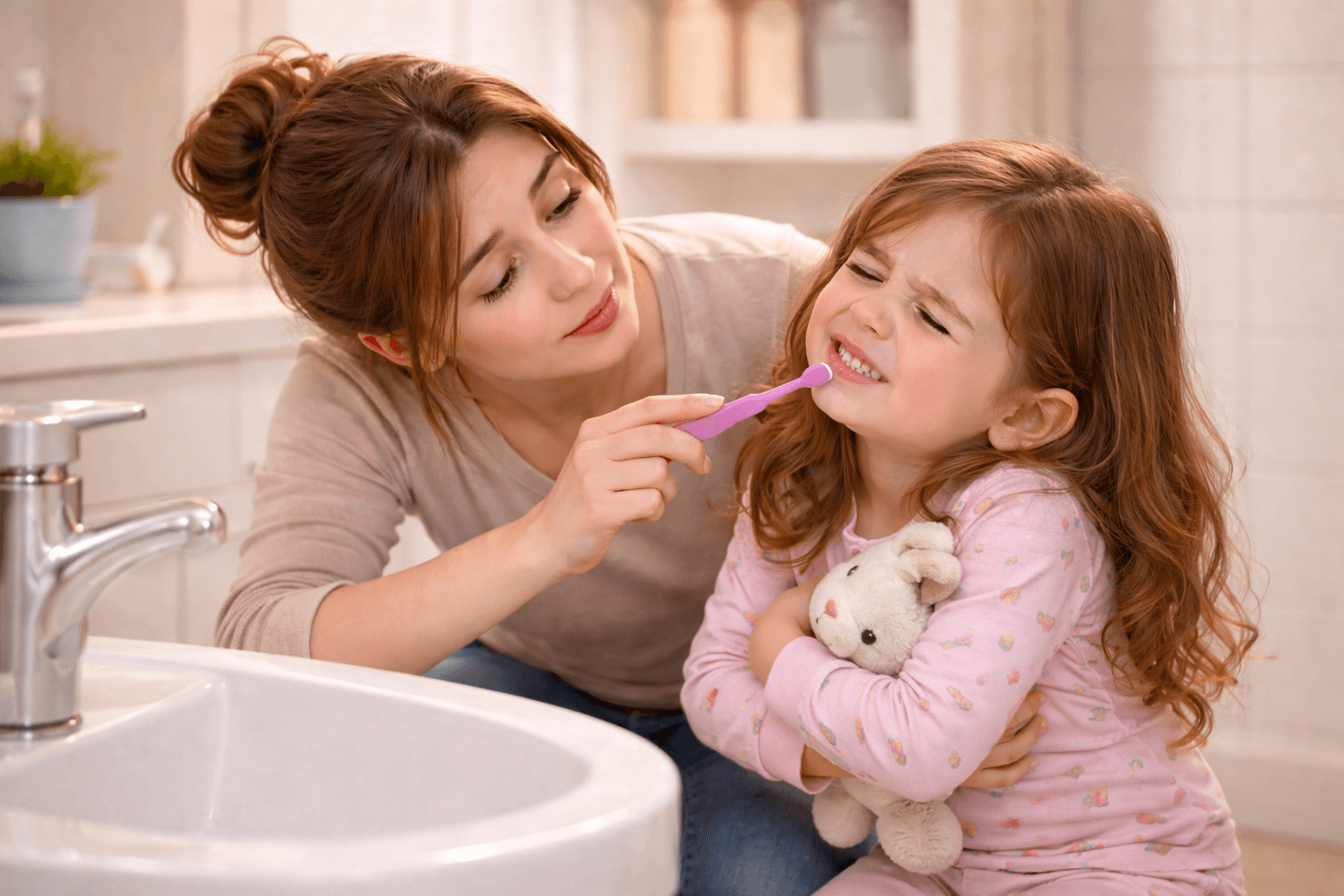
For many families, toothbrushing can turn into one of the hardest parts of the day. It often shows up right when everyone is already tired, running late, or trying to get through the bedtime routine. What starts as a simple reminder can quickly become a full toothbrushing power struggle.
The good news is this: brushing resistance is usually not just “bad behavior.” When a toddler refuses to brush teeth or an older child suddenly fights brushing, there is often a real reason underneath it.
Once you understand why kids hate brushing, it becomes much easier to respond in a way that helps instead of escalating the battle.
In this article, we’ll walk through some of the most common reasons children resist brushing and what actually works to make things easier.
Why do kids refuse to brush their teeth?
When a child refuses to brush their teeth, it is often a signal that something feels hard, uncomfortable, confusing, or overwhelming.
Here are some of the most common reasons behind brushing resistance:
- Big emotions and a need for control
- Discomfort or pain in the mouth
- Developing self-control and routine skills
- Sensory overload
- Not understanding why brushing matters
- Underdeveloped motor skills
- Negative associations or fear
Let’s look at each one more closely.
1. Big emotions can make brushing feel impossible
Sometimes brushing resistance has nothing to do with teeth at all.
Young children are still learning how to handle frustration, tiredness, transitions, and disappointment. If brushing happens during a stressful part of the day, your child may already be emotionally maxed out before the toothbrush even comes out.
This is especially common at bedtime. A child who seems stubborn may actually be overwhelmed, exhausted, or craving a little control after a busy day.
What helps
Keep the structure, but make the moment feel lighter.
Try:
- Turning brushing into a game: “Let’s find the sleepy back teeth.”
- Giving two simple choices: “Do you want the blue toothbrush or the green one?”
- Using a playful story or character voice during brushing
- Keeping your tone calm and steady, even if your child is upset
Children often cooperate better when brushing feels like something they do *with* you, not something being done *to* them.
This is one reason story-based routines can be so powerful. A playful world, familiar characters, and a sense of adventure can help shift brushing from a daily battle into a more positive habit.
2. Discomfort or pain may be part of the problem
If your toddler refuses to brush teeth suddenly, or your child used to brush without much fuss and now resists every time, it is worth considering whether brushing hurts.
Sensitive gums, erupting teeth, mouth sores, or early decay can make brushing unpleasant. Some children do not have the words to explain that something feels wrong, so the resistance shows up as crying, avoidance, or anger.
What helps
Ask simple, gentle questions such as:
- “Does anything hurt?”
- “Does this spot feel funny?”
- “Is the toothbrush too hard?”
You can also:
- Try a soft-bristled brush
- Brush more gently
- Watch for signs of sensitivity around certain teeth or gums
If brushing consistently seems painful, book a dental visit. A child who is avoiding brushing may be trying to tell you that something needs attention.
3. Self-control is still developing
A lot of toothbrushing power struggles happen because parents expect cooperation from skills that are still under construction.
Children are not born knowing how to transition smoothly, follow multi-step instructions, manage frustration, and stick with a routine when they do not feel like it. These abilities develop gradually.
That means a child can understand that brushing happens every day and still struggle to do it calmly.
What helps
Think simple, short, and consistent.
Try:
- Using the same brushing routine every morning and evening
- Breaking it into small steps
- Giving one instruction at a time
- Praising effort: “You opened your mouth so wide. That helped a lot.”
- Repeating the routine without turning it into a lecture
Repetition matters. Calm encouragement matters. Over time, those small moments of consistency help routines stick.
4. Sensory overload is a real reason why kids hate brushing
For some children, brushing feels like too much sensory input all at once.
- The taste of toothpaste may feel too strong.
- The foam may feel messy.
- The bristles may feel scratchy.
- The buzzing sound of an electric toothbrush may be overwhelming.
If your child hates brushing teeth, sensory discomfort could be a big part of the reason.
This is especially important to consider if your child is sensitive to clothing textures, food textures, sounds, or strong flavors in other parts of daily life too.
What helps
Experiment without pressure.
You can try:
- A milder or different toothpaste flavor
- A very small smear of toothpaste to start
- A toothbrush with extra-soft bristles
- Letting your child pick their toothbrush
- Brushing in front of a mirror so they can see what is happening
- Trying a manual brush if the electric toothbrush feels too intense
It can also help to ask specific questions:
- “Is it the taste?”
- “Does it feel too pokey?”
- “Is the sound too loud?”
When children feel heard, they are often more open to trying again.
5. Some kids do not understand why brushing matters
To adults, brushing is obvious. To children, it can feel random, boring, or unnecessary.
If a child does not understand the purpose, brushing may feel like one more demand in a day full of demands.
What helps
Keep explanations short, visual, and age-appropriate.
Try:
- “We brush sugar bugs and plaque off the teeth.”
- “Brushing helps keep your teeth strong and clean.”
- Showing with a picture, model, or simple video
- Using plaque-disclosing tablets as a fun visual tool when appropriate
- Reading stories that connect brushing with bravery, care, and healthy habits
Many children learn best through play and storytelling. When brushing becomes part of a bigger, meaningful story, it often feels more engaging and less like a chore.
6. Brushing is a tricky skill for little hands
Sometimes a child resists brushing because the task itself is hard.
Good brushing takes coordination, attention, and motor control. For young children, that is a lot to manage. They may want independence, but not yet have the skills to brush effectively on their own.
That gap can lead to frustration very quickly.
What helps
Support the skill without expecting perfection.
You can:
- Brush together
- Let your child start, then help finish
- Guide their hand gently
- Use praise for participation, not just results
- Keep practice positive and short
A helpful mindset is: independence grows in stages. Your child may be ready to participate before they are ready to do the full job alone.
7. Past stress can create negative brushing associations
If brushing has involved pressure, force, pain, or repeated conflict, your child may start reacting to the toothbrush before brushing even begins.
That does not mean you have failed. It means the routine may need a reset.
What helps
Focus on rebuilding trust.
Try:
- Using a gentler tone and slower pace
- Avoiding shame, threats, or long explanations in the moment
- Acknowledging feelings: “You really don’t feel like brushing right now.”
- Keeping boundaries calm and predictable
- Pairing brushing with comfort, connection, and routine
Children are more likely to cooperate when they feel safe, not pressured.
What actually works when your child refuses to brush their teeth?
If you are in the middle of daily brushing battles, here are the strategies that tend to help most:
1. Stay calm and consistent
You do not need a perfect response. You do need a steady one.
A calm, matter-of-fact tone helps prevent brushing from becoming a bigger emotional event than it needs to be.
2. Use play instead of pressure
Play lowers resistance.
Try pretending to brush away “sugar bugs,” counting teeth like treasure, or turning brushing into a mini adventure.
3. Offer small choices
Choices give children a sense of control without removing the boundary.
Examples:
- “Do you want to brush before pajamas or after?”
- “Should we sing a song or tell a tooth story?”
- “Do you want to start, or should I?”
4. Look for the real reason underneath the behavior
Before assuming defiance, ask yourself:
- Are they tired?
- Does something hurt?
- Is the taste or texture bothering them?
- Are they feeling rushed or pressured?
- Is the task too hard to do alone?
A small adjustment can make a surprisingly big difference.
5. Keep the routine simple
Children do best with routines that are predictable and repeatable.
The less negotiation around brushing, the easier it often becomes over time.
6. Make support visible and encouraging
Brushing charts, reward trackers, story-based routines, and playful printables can help children feel more engaged and motivated.
These tools work best when they are used as encouragement, not pressure.
When to ask a dentist for help
Sometimes brushing resistance is a normal phase. Sometimes it is a sign that more support is needed.
Check in with a dentist if:
- Brushing seems painful
- Your child avoids one area of the mouth repeatedly
- You notice signs of cavities, swollen gums, or bleeding
- Resistance becomes extreme or sudden
- You want help finding better tools or techniques for your child’s needs
A supportive dental professional can help rule out discomfort and offer guidance tailored to your child.
A gentle reminder for parents
If your child hates brushing teeth, it does not mean you are doing something wrong.
Brushing resistance is common. Toothbrushing power struggles are common. Learning a daily habit takes time, especially when children are tired, sensitive, strong-willed, or still developing the skills that make routines easier.
What matters most is not winning the battle. It is building a routine your child can grow into with trust, consistency, and support.
Small shifts really can change the feel of brushing over time.
Make brushing feel a little braver
At Brave Tooth Alliance, we believe kids often respond best when dental care feels safe, playful, and meaningful.
That is why we love story-based tools, printable activities, and gentle routines that help children build confidence while learning healthy habits.
If your child is struggling with brushing, explore our storybook and printable resources for more ways to make oral care feel less stressful and more doable.