Flossing
When Should Kids Start Flossing? A Dentist's Simple Guide
Flossing matters earlier than many parents expect, but the skill itself should be taught slowly and gently.
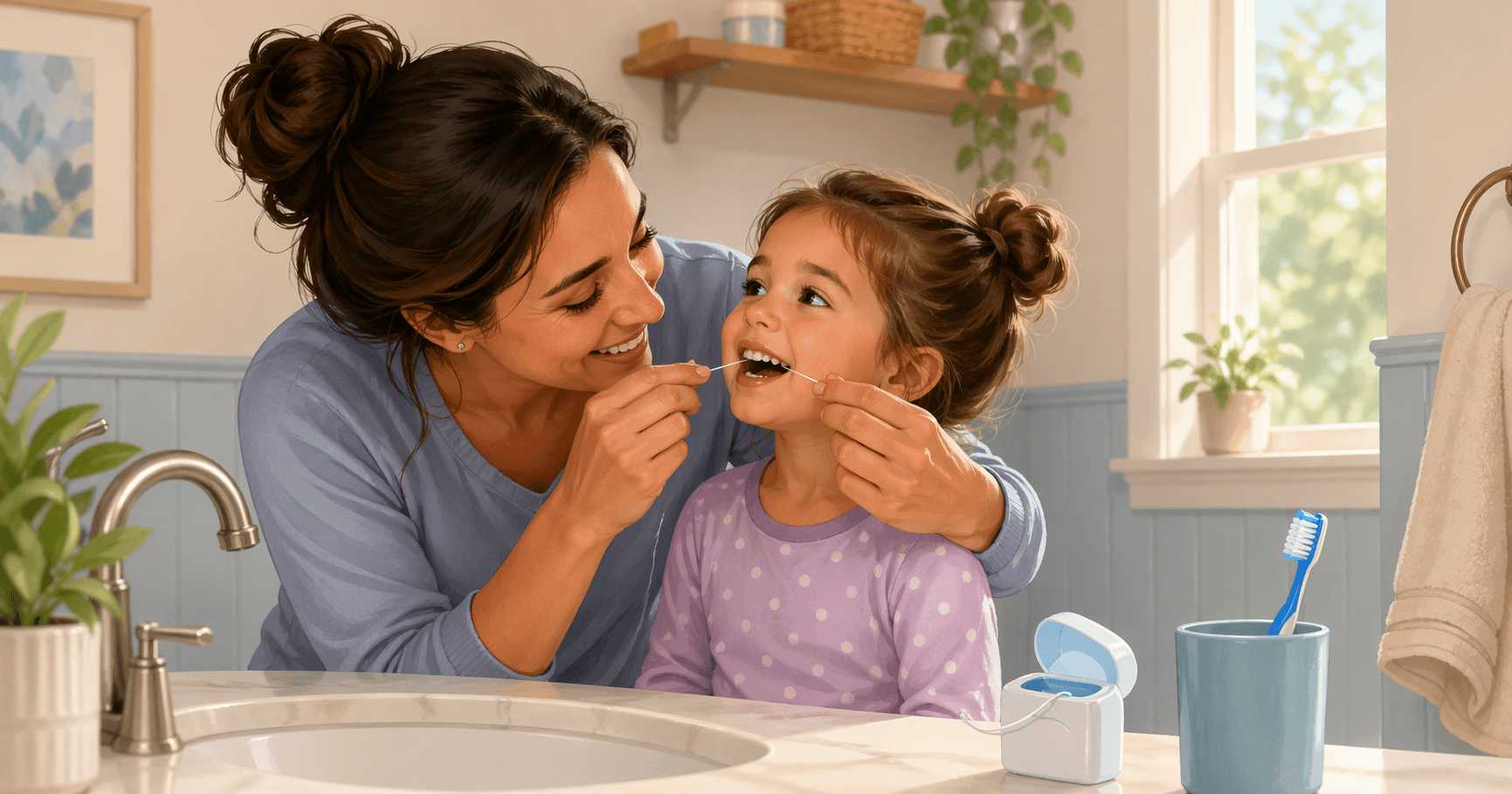
Parents often ask the same question: When should kids start flossing?
It is a great question, because flossing can feel like an advanced skill - and for young children, it is.
The short answer is this: kids should start flossing as soon as two teeth touch each other, because a toothbrush cannot clean the tight spaces between them. But that does not mean children should be expected to floss well on their own right away.
Flossing is one of those habits that matters early, but takes time to learn safely and correctly.
In this simple guide, we’ll cover why flossing matters, whether baby teeth really need it, the typical flossing age for children, and how to teach flossing without turning it into a stressful routine.
Why flossing matters for kids
A toothbrush does an important job - but it does not reach everything.
Toothbrush bristles clean the front, back, and chewing surfaces of teeth, but they do not clean the tight spaces between teeth where food and plaque can get trapped.
That matters because plaque is full of bacteria. Those bacteria feed on sugars, produce acid, and can start damaging enamel in the places a toothbrush misses.
Flossing helps:
• remove plaque and food between teeth
• lower the risk of between-the-teeth cavities
• keep gums healthier
• reduce early gum inflammation and bleeding
That is why flossing is not just an ‘extra’ step. It is part of a complete kids dental hygiene guide - especially once teeth begin touching side by side.
Is flossing necessary for baby teeth?
Yes - flossing is necessary for baby teeth when those teeth touch.
Some parents assume flossing can wait because baby teeth eventually fall out. But baby teeth matter a lot. They help with chewing, speech development, jaw growth, spacing for permanent teeth, and everyday comfort.
They are also vulnerable to decay. In fact, cavities between baby teeth can develop quickly because those tight spaces are hard to clean and easy to miss.
That makes flossing especially important once the teeth are close together.
And when permanent teeth begin to come in, flossing stays important. Newly erupted permanent teeth are still maturing, so protecting them early is a very good idea.
When should kids start flossing?
The best answer is: start flossing when any two teeth touch.
That may happen in toddlerhood for some children and a little later for others. The key is not a birthday - it is whether the toothbrush can still reach between the teeth. If it cannot, floss is needed.
Pediatric oral-health guidance supports this simple rule: once teeth touch, flossing becomes part of the hygiene routine.
Flossing age for children: what parents can expect
Here is a practical age-by-age guide based on common pediatric dental guidance and normal skill development.
Ages 3-6: parent or caregiver does the flossing
This is the stage when flossing should be fully parent-guided.
Young children usually do not yet have the dexterity, patience, or gum awareness to floss safely on their own. Incorrect flossing can snap into the gums, cause discomfort, or make a child dislike the habit before they have even learned it.
At this age, the goal is simple:
• keep flossing gentle
• make it brief and calm
• help children get used to it as part of the routine
If you are flossing a preschooler, waxed floss or child-friendly floss picks can sometimes make the process easier, though technique still matters most.
Around age 6: begin teaching the skill
Around age 6, many children start losing baby teeth and getting new permanent teeth. This is an important time to start teaching flossing more actively - especially if your child has crowded teeth, a higher cavity risk, or orthodontic concerns.
But teaching is not the same as handing over the whole job.
At this age, it is usually best to:
• let your child watch closely
• explain what you are doing
• let them try on easy areas with help
• keep doing the final flossing yourself or with close supervision
This is also a great time to ask your pediatric dentist to demonstrate proper flossing technique for your child’s specific smile.
Around age 9: many kids are ready to learn more independence
By around age 9, many children have better hand control and may be ready to floss more independently. But even then, occasional parental checks are a smart idea.
Some children are ready a little earlier. Some need support longer. The real question is not, ‘Can they hold floss?’ It is, ‘Can they floss gently, reach the right areas, and do a thorough job without hurting their gums?’
So if you are wondering about the flossing age for children, think of it as a gradual transition, not a sudden handoff.
Why technique matters so much
Flossing is helpful - but incorrect technique can make it unpleasant.
If a child sees too hard or snaps floss straight down into the gums, flossing can feel painful. That pain can quickly turn a healthy habit into something a child dreads.
Good flossing technique means:
• guiding floss gently between the teeth
• curving it around the side of each tooth
• moving carefully below the gumline without forcing
• using clean sections as you move through the mouth
That is why parent help matters for so long. Flossing is an important dental care skill, but it is also a precise one.
How to introduce flossing without stress
Here are a few parent-friendly tips:
1. Start gently
Do not try to floss every tight contact perfectly on day one if your child is new to it. Start with the most important areas and build comfort first.
2. Use waxed floss if it slides more easily
Waxed floss often moves more smoothly through tight contacts and can make the experience gentler.
3. Build from a few times a week toward daily flossing
If daily flossing feels like too much at first, begin a few times a week and build toward a full daily habit.
4. Keep your language calm and simple
Instead of making flossing sound scary or medical, try friendly language like: ‘We’re cleaning the tiny spaces the toothbrush can’t reach.’
5. Ask your pediatric dentist to double-check your technique
A quick demonstration can make a huge difference. Your child’s dentist can show you how to floss correctly, point out the hardest areas, and help you decide when your child is ready for more independence.
When to ask your dentist for extra guidance
Talk with your pediatric dentist if:
• your child’s teeth are very tight or crowded
• gums bleed often even with gentle cleaning
• flossing seems painful every time
• your child has braces, space maintainers, or other appliances
• you are not sure whether your child is ready to try independently
A dentist can tailor the timing and technique to your child’s mouth, rather than giving a one-size-fits-all answer.
A simple way to think about it
If brushing cleans the outer surfaces, flossing cleans the hidden side spaces.
That means flossing is not optional once teeth touch - even for baby teeth.
The good news is that parents do not need to make flossing perfect overnight. A gentle, step-by-step routine works best.
For most families, that looks like this:
• start when teeth touch
• parent helps or does it in the early years
• teach the technique around school age
• move toward independence later, with check-ins
That approach protects your child’s teeth, gums, and confidence all at the same time.
Final thoughts for parents
If flossing feels awkward at first, that is normal. It is a more advanced skill than brushing, and many children need time, support, and lots of gentle repetition.
What matters most is starting at the right time, using good technique, and not assuming baby teeth can be skipped.
At Brave Tooth Alliance, we believe healthy habits are easier to build when children feel supported, not pressured. If you want a more playful way to learn flossing and brushing together, explore Brave Tooth Alliance: Adventures in Dental Hygiene - where healthy habits are taught through stories, lovable heroes, and family-friendly routines.