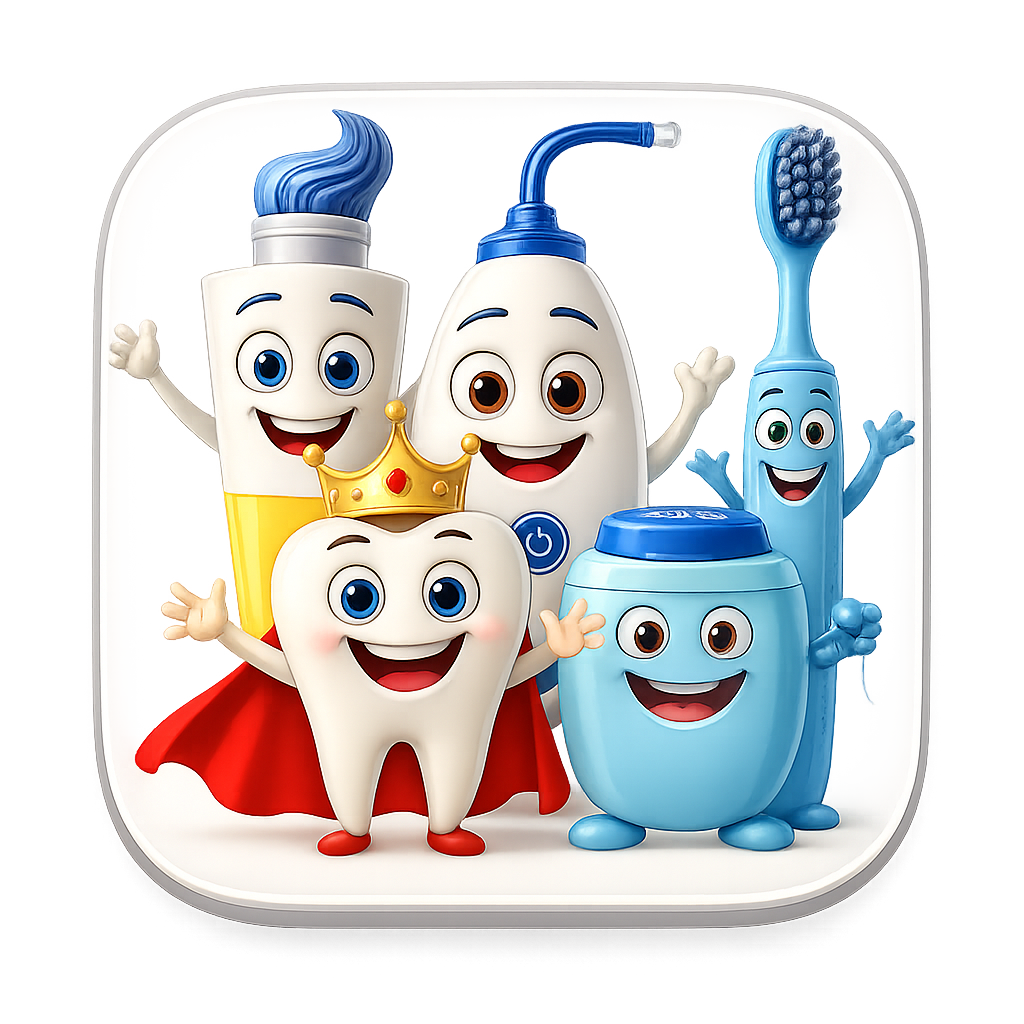
Making Brushing Fun
How Storytelling Can Help If Your Child Hates Brushing Teeth
If your toddler refuses to brush teeth, you are far from alone. For many families, brushing becomes one more bedtime hurdle—right when everyone is tired and patience is running low. And when a child hates brushing teeth, the usual reminders often do not help. That is where storytelling can make a real difference.

Children naturally learn through stories, characters, pictures, and imaginative play. A lecture about plaque is easy to ignore. A brave hero protecting sparkling teeth from sneaky sugar bugs is much harder to forget. That is why kids books about brushing teeth, dental hygiene stories for children, and a simple teeth brushing bedtime story can turn a daily struggle into something your child actually looks forward to.
In this article, we will look at why stories work so well, how to use them at home, and simple ways to make brushing feel playful, meaningful, and much less stressful.
Why storytelling works so well for brushing
Children do not usually learn best through long explanations. They learn through repetition, play, visuals, and emotional connection. Stories combine all of those.
When brushing is wrapped inside a story, children can:
• understand why brushing matters in a way that feels concrete
• feel more in control by joining the adventure
• connect brushing with familiar routines and characters
• practice courage when they feel nervous or resistant
• remember steps more easily through repetition and narrative
This matters because brushing is not just information. It is a habit. And habits stick better when they feel engaging.
Professional pediatric guidance also supports the idea that brushing works best when it is consistent, parent-supported, and made manageable for children. Parents are encouraged to brush children’s teeth twice daily with fluoride toothpaste, use age-appropriate amounts, and help children with brushing until they have the coordination to do it well on their own. Supportive routines and playful cooperation can make those recommendations much easier to follow at home.
Why do some kids resist brushing in the first place
Before you try to “make brushing fun,” it helps to understand why resistance happens.
A child may resist because they are:
• tired and emotionally overloaded
• sensitive to taste, texture, or sound
• unsure why brushing matters
• frustrated by a task that feels hard
• reacting to past pressure or stress around brushing
Storytelling helps because it lowers tension. Instead of “Open your mouth right now,” the moment becomes, “The Tooth Team needs your help.” That small shift can change the mood of the entire routine.
How stories make brushing more exciting
Stories turn brushing from a task into a role your child can step into.
Instead of being told what to do, your child gets to become:
• the brave helper
• the tooth defender
• the cavity catcher
• the bedtime hero
• the character who saves the back teeth before sleep
That sense of identity matters. Children often cooperate more when they feel capable, included, and emotionally connected to the activity.
A good brushing story does not need to be complicated. In fact, simple is better.
Here is an example:
“Tonight the sugar bugs are hiding behind the molars. We need a brave brusher to sweep them away before the teeth go to sleep.”
That is short, visual, and easy to repeat. It gives brushing a purpose your child can understand.
What makes a good teeth-brushing bedtime story?
A helpful teeth brushing bedtime story usually has a few simple ingredients:
A clear mission
Children love knowing what the goal is. For example: rescue the sleepy teeth, chase away sugar bugs, polish the princess teeth, or help the tooth captain check every corner.
A friendly character
Dental characters for kids can make the routine feel familiar and comforting. This could be a brave toothbrush, a superhero tooth, a sparkly dragon, or a team of smiling tooth guardians.
A small challenge
Stories stay interesting when there is a problem to solve. Maybe the back teeth are hiding. Maybe the plaque monsters are trying to stay overnight. Maybe the “tiny tooth tunnel” needs extra brushing.
A happy ending
Children like closure. End the story with clean, shining, sleepy teeth ready for bed.
The goal is not perfection. The goal is to create a repeatable story pattern that makes brushing feel easier.
6 simple ways to use storytelling at home
1. Create a brushing hero
Give your child a role to play each night. They might be “Captain Sparkle,” “The Brave Brusher,” or “The Tooth Defender.”
This works especially well for children who respond to identity and pretend play.
2. Give the toothbrush a personality
Turn the toothbrush into a helper with a voice and a job.
Examples:
• “I am looking for sleepy back teeth.”
• “Let me sweep the tiny corners.”
• “We missed a sugar bug over here.”
This can soften resistance because the toothbrush feels less like a demand and more like part of the story.
3. Use the same story structure every night
Children love repetition. A familiar routine helps them know what to expect and can reduce resistance.
You do not need a brand-new story every evening. Use the same framework with small variations:
• who is helping tonight
• where the “sugar bugs” are hiding
• which teeth need extra bravery
4. Match the story to your child’s interests
A child who loves dinosaurs may want to brush like a T. rex hero. A child who loves princesses may want to polish royal teeth before bed. A child who loves space may want to help the “galaxy teeth” shine.
The more personal the story feels, the more engaging it becomes.
5. Let your child help tell the story
Ask simple questions:
• “Who is helping your teeth tonight?”
• “Which tooth needs extra help?”
• “Are the sugar bugs hiding in the front or the back?”
This gives your child a sense of ownership, which can reduce pushback.
6. Pair stories with bright pictures and visual tools
Children are highly visual learners. Bright, friendly illustrations can reinforce the story and help explain what brushing is for.
That is one reason kids books about brushing teeth can be so effective. They give children memorable images, repeatable language, and dental characters for kids they can connect with beyond the bathroom.
How books about brushing teeth can help
Not every parent wants to invent a new story after a long day. That is where books can help.
The best dental hygiene stories for children tend to do three things well:
• make brushing feel normal and positive
• explain oral care in simple, child-friendly language
• connect healthy habits with fun, confidence, and routine
Books are especially useful when your child:
• resists direct instructions
• loves bedtime reading
• needs gentle repetition
• feels nervous about teeth or the dentist
• responds well to characters and pictures
A story-based brushing book can become part of the routine itself: read, brush, cuddle, bed. That kind of rhythm is comforting for children and practical for parents.
How to build a story-based brushing routine
You do not need a complicated system. Keep it simple and repeatable.
Try this:
Step 1: Read a short brushing story or start your family’s tooth adventure.
Step 2: Name the mission for the night.
Step 3: Let your child choose their hero role or toothbrush.
Step 4: Brush together while narrating the story.
Step 5: End with praise and a calm bedtime transition.
This works best when the mood stays light. Storytelling is not about tricking your child. It is about meeting them in the way children naturally learn.
What if your child still hates brushing teeth?
Storytelling helps, but it will not solve every brushing struggle overnight.
If your child still resists, look at the full picture:
• Are they too tired?
• Does the toothpaste taste too strong?
• Are the bristles uncomfortable?
• Does anything hurt?
• Is the routine happening during an already stressful part of the evening?
Sometimes the best approach is combining storytelling with a few practical changes:
• try a softer brush
• let your child choose the toothpaste flavor
• brush a little earlier in the evening
• use a mirror so they can see what is happening
• let them start, then you finish
When storytelling is paired with comfort, consistency, and gentle support, it becomes much more effective.
A note on real dental care
Stories can make brushing easier, but the basics still matter.
Professional pediatric recommendations emphasize:
• brushing twice a day with fluoride toothpaste
• using only a smear or rice-sized amount for children under 3
• using a pea-sized amount for children ages 3 to 6
• helping children brush until they have the skill to do a good job on their own, often around age 8
• choosing a soft-bristled, child-sized toothbrush
So yes, imagination matters. But it works best when paired with solid brushing habits and parent support.
A gentler way to build healthy habits
If your child resists brushing, it does not mean you are doing it wrong. Many children need more than instructions. They need connection, play, and a reason that makes sense in their world.
That is why storytelling can be so powerful.
A warm, familiar brushing story can transform the mood of the routine. It can help a tired child feel brave, help a resistant child feel involved, and help parents step out of the nightly power struggle.
At Brave Tooth Alliance, we believe healthy habits grow best when children feel encouraged, capable, and emotionally safe. Through story, characters, and playful routines, brushing can become something children understand—and even enjoy.
If you are looking for more ways to make oral care easier, explore our story-driven book and printable resources designed to help families build confident brushing habits at home.