Brushing Resistance & Power Struggles
My Child Lies About Brushing: Why Kids Fake Brushing Teeth and What to Do
If your child says they brushed, but the toothbrush is only wet and their teeth still look fuzzy, you are not imagining it. This is a common family problem. Some children quickly run the brush under water. Some suck the toothpaste off and stop there. Some swish the brush around for ten seconds and call it done. And some truly think that counts as brushing.
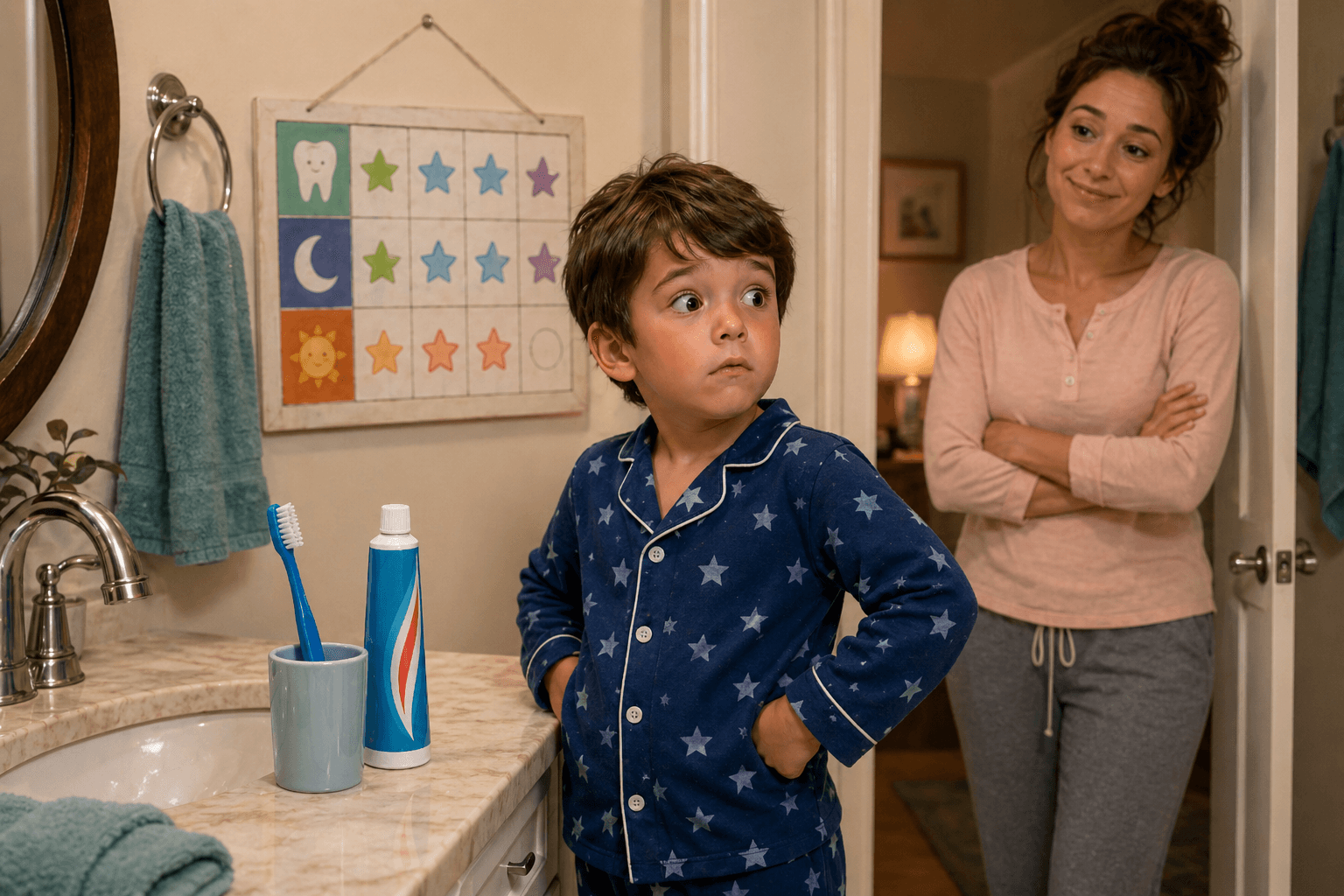
It can feel frustrating, especially when you are trying to build healthy habits and avoid nightly arguments. But in most cases, this is not a sign that your child is “bad” or doomed to be dishonest. It is usually a clue that something about brushing still feels hard, uncomfortable, boring, rushed, or emotionally loaded.
The goal is not just to catch fake brushing. The goal is to understand what is getting in the way and then make toothbrushing more honest, more doable, and more effective.
Why do kids fake brushing in the first place
When a kid lies about brushing, there is usually a reason underneath the behavior. Sometimes it is a simple shortcut-taking. Sometimes it is avoidance. Sometimes it is a power struggle. And sometimes it is a skill problem, not a character problem.
Before you respond, it helps to think about what your child may be trying to avoid or protect.
1. They want the task to be over
Brushing can feel long and boring to a child, especially at the end of the day when they are tired and ready to move on. Wetting the toothbrush may be a fast way to look “done” without doing the work.
2. Brushing may feel uncomfortable
A child who hates the taste of toothpaste, dislikes foam, has sensitive gums, or finds brushing scratchy may avoid it by pretending. If your child only fakes brushing during certain moments, discomfort could be part of the story.
3. They may not understand what real brushing looks like
Some children genuinely think a quick pass over the front teeth is enough. Others do not understand why the back teeth, gumline, and inside surfaces matter. If no one has shown them what “clean enough” means, they may believe they brushed when they really did not.
4. They want independence before they are ready
Many kids want to do it themselves long before they have the dexterity to do a thorough job. A child who insists on brushing alone may also hide rushed brushing because they do not want help, corrections, or a parent taking over.
5. They are trying to avoid getting in trouble
Pediatric guidance on honesty notes that children often lie when they know they have done something wrong and want to avoid disappointment or punishment. If brushing has become tense, some children may choose a quick lie because it feels safer than another conflict.
6. The habit still does not feel important to them
Children do not always connect brushing with health in the way adults do. If they do not yet understand plaque, cavities, or why bedtime brushing matters, fake brushing can feel harmless to them.
What to do when your child lies about brushing
The most helpful response is calm, clear, and consistent. Think less like a detective and more like a coach. You are building a health habit and teaching honesty at the same time.
1. Treat brushing as a non-negotiable health rule
Brushing should not depend on mood, bargaining, or whether your child feels like it. Just like wearing a seat belt or washing a cut, brushing is a basic health task. You can be warm and kind while staying firm: “I hear that you don’t want to. Brushing still needs to happen.”
2. Supervise instead of relying on reports
If fake brushing is happening, the simplest fix is usually to stop asking and start watching. Official pediatric dental guidance states that young children do not brush effectively on their own, and many still need help or supervision throughout the early school years. Watching removes guesswork and lowers the chance that brushing turns into a truth test every night.
3. Brush together
Many kids do better when brushing is a shared routine instead of a private task. Stand side by side at the mirror. Brush your own teeth while your child brushes theirs. This lets you model pacing, angles, and calm consistency. Being an example matters: children learn a lot by watching how adults handle everyday habits.
4. Use a “you brush, then I check” routine
Many families find success with a two-step structure: your child brushes first, then you do a quick check and finish any missed areas. This protects independence without pretending that a rushed brush is enough. You might say, “You start, and then I’ll help catch the spots that are hard to see.”
5. Show, don’t just tell
Children often understand better when they can see what was missed. Plaque disclosing tablets or other disclosing agents can be a useful check-in tool because they color the plaque that your child did not remove. Used occasionally, they turn brushing from an argument into a visual lesson.
6. Check for pain, sensitivity, or sensory issues
If your child keeps avoiding brushing, ask gentle questions. Does anything hurt? Is the toothpaste too spicy? Are the bristles too rough? A softer brush, milder toothpaste, slower pace, or dental visit may solve what looks like “lying” but is really avoidance of discomfort.
7. Talk about honesty at a calm time, not in the heat of bedtime
If you discover fake brushing, address it, but save the bigger conversation for a calm moment. Pediatric guidance on lying suggests that harsh punishment is usually not very effective. A better message is: “I need us to tell the truth about health things, because that helps me keep you safe.” That keeps the focus on trust and problem-solving instead of shame.
8. Keep the routine predictable
Children do best with routines that are regular, predictable, and consistent. If brushing happens in the same order every night, with fewer negotiations and fewer surprises, there is less room for stalling, sneaking, and fake finishing. A simple sequence like pajamas, brush, book, bed works well for many families.
9. Praise honesty and effort
If your child admits, “I didn’t really brush,” treat that truth-telling as progress. You can correct the behavior and still reinforce honesty: “Thank you for telling me the truth. Let’s do it properly now.” Also, notice real effort, not just perfect technique. Positive attention helps healthy habits stick.
10. Bring in a dentist if the pattern keeps going
Sometimes kids tune parents out, especially if brushing has become a power struggle. A pediatric dentist can help explain brushing in a fresh, child-friendly way, show technique, look for hidden discomfort, and recommend the right tools. For some children, advice lands differently when it comes from a trusted outside adult.
How to supervise toothbrushing without making it a battle
Supervising toothbrushing does not have to mean hovering angrily. It can be calm, matter-of-fact, and brief.
- Stand where you can actually see the teeth, not just the moving toothbrush.
- Use a timer, song, or simple routine so your child knows what “done” means.
- If your child rushes, guide them to the back teeth, gumline, and inside surfaces.
- For younger children or kids who miss a lot, finish the brushing yourself.
- Use disclosure tablets once in a while as a teaching tool, not as a punishment.
- Keep your tone neutral. The less drama around brushing, the less rewarding fake brushing becomes.
When fake brushing may point to a bigger issue
Sometimes brushing struggles are mostly about routine. Sometimes, they are a clue that your child needs more support.
- Your child regularly says brushing hurts.
- You notice bleeding gums, bad breath, visible plaque, or repeated cavities.
- They seem unusually anxious about brushing, even with gentle help.
- They lie often about many daily tasks, not just brushing.
- Power struggles around hygiene are affecting family life every day.
If that sounds familiar, bring it up with your pediatric dentist and your child’s pediatrician. A dentist can check for pain, plaque buildup, technique problems, crowding, or other oral-health issues. A pediatrician or child mental-health professional may help if the lying is frequent, intense, or part of a broader behavioral pattern.
A gentle reminder for parents
If your kid lies about brushing, it does not mean you have failed. It usually means the current routine is not working yet.
Try to stay steady. Be the example. Keep the rule simple. Watch instead of assuming. Help instead of just reminding. And when needed, let your dentist join the team.
Toothbrushing is a health habit, not a test of willpower. With calm supervision and enough repetition, most children can move from fake brushing to real brushing—and from conflict to confidence.